Details
Book description
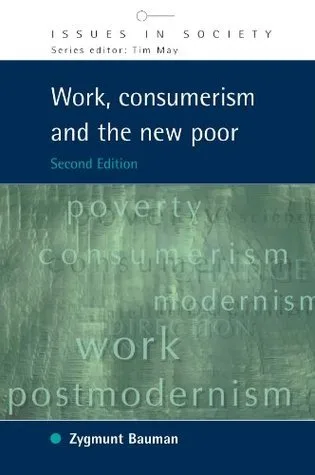
In Work, Consumerism and the New Poor, Zygmunt Bauman examines how the meaning and experience of poverty have changed alongside the transformation from a society organized around production and employment to one centered on consumption. In the earlier model, poverty was closely associated with unemployment; in a consumer society, it is increasingly understood through exclusion from the choices and standards that define being a consumer. Bauman traces this shift across modern history and considers its consequences for people living in poverty.
The book surveys the social effects of this changing definition and asks how different approaches to fighting poverty and easing hardship respond to contemporary conditions. Its analysis connects poverty with broader questions of work, consumer choice, social exclusion and vulnerability. The revised edition also addresses developments in scholarship and public debate, including redundancy and disposability, changes to work through business process re-engineering, and the effects of capital flows across countries.
Bauman’s approach is presented as a wide-ranging, carefully argued sociological analysis, written to encourage readers to reassess current social arrangements. Rather than treating poverty as simply a lack of employment, the book explores how consumer expectations shape the status and prospects of those who cannot participate fully in consumer life. Its themes make it relevant to discussions of social policy, political responses to poverty and the organization of work in contemporary society.
This book is suited to students, lecturers and researchers in sociology, politics and social policy, as well as readers interested in poverty and contemporary social issues. It offers a framework for considering how changing economic and cultural expectations affect both the experience of hardship and the possible forms of relief.