We Wish to Inform You That Tomorrow We Will Be Killed With Our Families: Stories from Rwanda
PLUS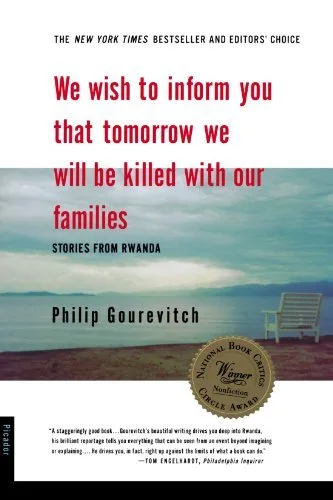
Details
Book description
In this work of nonfiction, Philip Gourevitch reports on Rwanda and neighboring states in the aftermath of the 1994 genocide. Drawing on firsthand accounts and intimate portraits of Rwandans, he examines the violence and its consequences for people and communities. The title comes from a chilling phrase in a letter written by a Tutsi pastor to his Hutu church president, an image that frames the book’s account of events and their human cost.
Gourevitch follows the aftermath through mass displacement, crowded prisons and refugee camps, and the difficult pursuit of justice. He also considers the temptations of revenge and the psychological and political challenges faced by survivors and others trying to rebuild their lives. Rather than treating the genocide as an isolated episode, the narrative explores the forces and choices that shaped it and the pressures that continued to threaten the region.
The book extends its focus to the political consequences beyond Rwanda, including conflict in the Congo as resurgent genocidal forces threatened to spread violence into central Africa. At its heart is a difficult question: whether a society composed largely of perpetrators and victims can create a shared national future. Gourevitch connects this question to broader struggles to establish stable, habitable political orders.
Written with dramatic intensity and grounded in reporting and testimony, this is a work of witness about genocide, its aftermath, and the persistence of the human spirit under extreme conditions. It is suited to readers of narrative nonfiction, African history, political science, and accounts of justice, memory, and post-conflict society.