Details
Book description
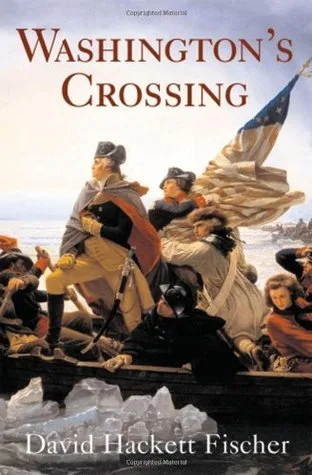
In *Washington’s Crossing*, historian David Hackett Fischer examines the winter campaign that helped revive the American Revolution after a series of devastating defeats. Six months after the Declaration of Independence, the Continental Army had been driven from New York, lost much of its strength, and retreated across the Delaware River. British and German forces had occupied parts of the colonies and advanced toward Philadelphia, while panic and despair threatened the revolutionary cause.
Fischer recounts George Washington’s decision to cross the Delaware on Christmas night and attack the Hessian garrison at Trenton, followed by the subsequent fighting at Trenton and Princeton. The campaign unfolded amid harsh winter conditions and a rapidly changing military situation. Its outcome depended on difficult choices by many people, from commanders to civilians, as the American forces sought to exploit opportunities and avoid being trapped by the British.
Beyond the battles, the book considers how contrasting military systems shaped the campaign. Fischer describes the British and German forces as rigid and hierarchical, while the Americans developed a more open and flexible approach. He also explores an emerging American ethic of warfare, described as a “policy of humanity,” and considers how moral victories could produce material effects. The account emphasizes contingency: the campaign’s results were not inevitable, but arose through a sequence of decisions and responses.
Combining military narrative with analysis of political and social change, *Washington’s Crossing* presents the winter campaign as a pivotal moment in American history. It is suited to readers interested in the American Revolution, George Washington, military history, and the relationship between leadership, strategy, and the fortunes of a revolutionary movement.