The Unthinkable: Who Survives When Disaster Strikes—and Why
PLUS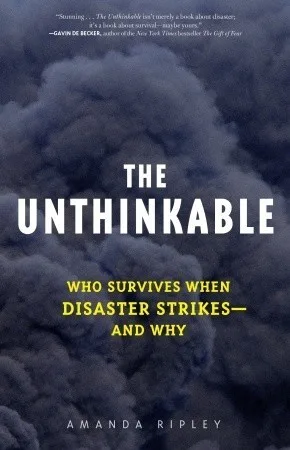
Details
Book description
In The Unthinkable, journalist Amanda Ripley investigates how people respond when disaster turns ordinary life into a crisis. Drawing on events that include earthquakes, wildfires, pandemics, and acts of terror, she asks why some people survive while others do not—and what human behavior, perception, and decision-making have to do with the difference.
Ripley brings together neuroscience, trauma psychology, disaster research, and firsthand accounts. Her reporting explores the brain’s fear circuits, the risks of crowd psychology, the role of trust in leadership, and the ways people may respond to extreme fear. Rather than treating survival as a matter of instinct alone, the book examines the often-invisible factors that shape how people understand danger and act under pressure.
The revised and updated edition addresses the pandemic, social media’s role in disaster response, and large-scale, slow-moving threats such as climate catastrophes. Its approach combines accessible scientific explanation with investigative journalism and accounts from people with direct experience of danger. The book also considers how understanding the mind’s response to crisis may help people improve their chances of coping with life-threatening situations.
Written for general readers interested in psychology, emergency response, and human behavior, The Unthinkable offers an informed look at survival without reducing disaster to simple rules. It is especially suited to readers who want to understand how individuals and groups react in emergencies, and how knowledge of those reactions can support better preparation.