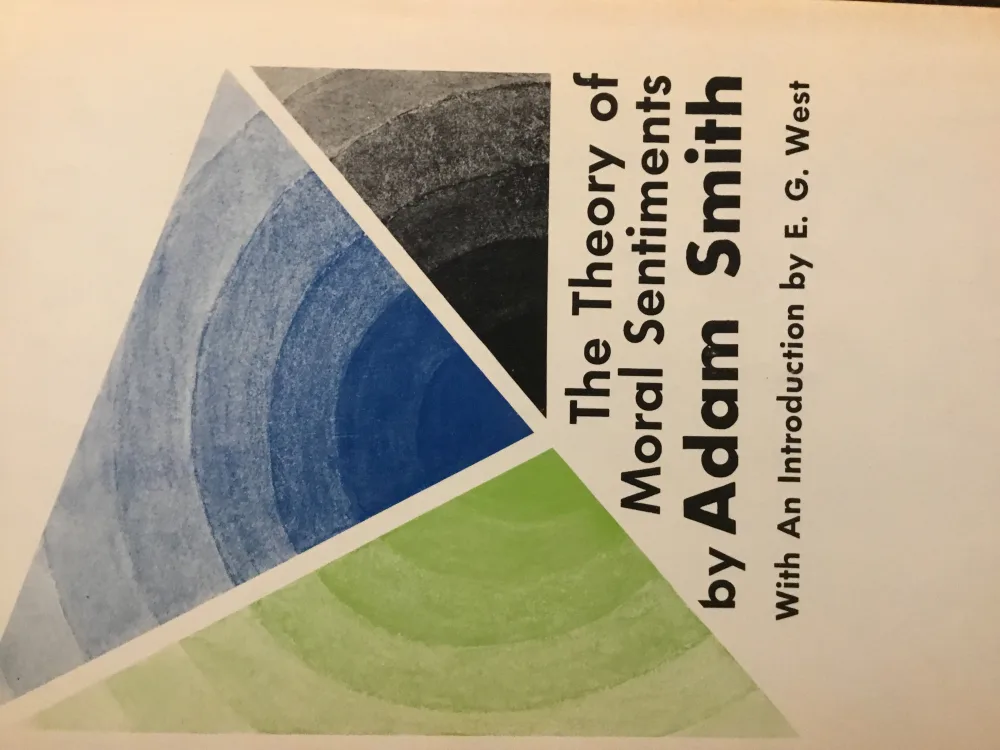
Details
Book description
In The Theory of Moral Sentiments, Adam Smith examines how people form moral judgments and assess the conduct of others. He places human sympathy at the center of this process: we consider another person’s circumstances and ask whether we can imagine sharing their feelings. This imagined point of view helps us decide whether an action or emotion is fitting.
A key idea is the “impartial spectator,” an imagined observer who evaluates our behavior without the distortions of personal interest. Smith considers how this perspective may be supplied by another person—or by our own conscience—and how it shapes responses to grief, anger, gratitude and benevolence. He also explores the tensions between self-interest and concern for others, alongside sacrifice, magnanimity, education, cultural expectations, self-command and justice.
Smith develops his arguments through moral reflection and engagement with earlier thinkers, including figures from antiquity and writers closer to his own time. The work considers not only how people judge the actions of others, but how they learn to judge themselves and regulate their conduct. Its subject is the formation of moral sentiments within social life, rather than a fictional narrative.
A foundational work of moral philosophy, the book stands on its own while also providing context for Smith’s broader thinking, including ideas associated with The Wealth of Nations. It is suited to readers of philosophy, ethics and intellectual history, as well as students exploring the roots of modern moral and social thought.