Details
Book description
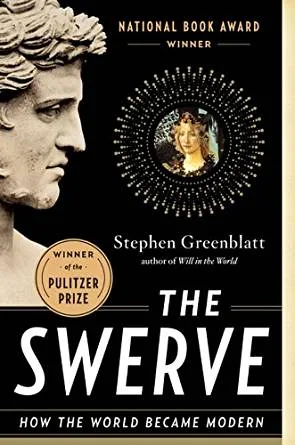
In The Swerve: How the World Became Modern, literary scholar Stephen Greenblatt traces the recovery of an ancient poem and its long afterlife in Western thought. The story centers on Poggio Bracciolini, a Renaissance book hunter who, in 1417, found a manuscript of Lucretius’ On the Nature of Things in a remote monastery and arranged for it to be copied. The poem had been nearly lost for more than a thousand years.
Greenblatt presents the work as both a literary discovery and a meeting with ideas that challenged prevailing beliefs. Lucretius described a universe operating without divine intervention, argued that religious fear harms human life, connected pleasure with virtue, and pictured matter as tiny particles in continual motion. The poem’s return to circulation, Greenblatt argues, helped carry these ideas into later debates and intellectual traditions.
Moving from ancient philosophical gardens to medieval monastic scriptoria and the competitive world of a Renaissance papal court, the book follows the conditions that preserved, obscured, and revived classical writing. It also considers the poem’s influence on thinkers including Galileo, Freud, Darwin, Einstein, and Thomas Jefferson, and its trace in the Declaration of Independence. The result is an account of how the survival of a text can shape the history of ideas.
Written for general readers as well as those interested in history, literature, and philosophy, The Swerve combines historical scholarship with a narrative built around a manuscript’s rediscovery. It offers an accessible route into Renaissance book culture and the continuing consequences of ancient ideas.