The Righteous Mind: Why Good People are Divided by Politics and Religion
PLUS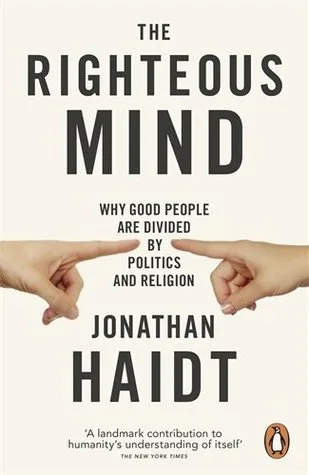
Details
Book description
In The Righteous Mind, social psychologist Jonathan Haidt examines how people form moral judgments and why those judgments can divide communities along political and religious lines. Drawing on his research in moral psychology, he argues that moral reactions often begin with intuition rather than deliberate reasoning. This perspective offers a way to understand why people who see themselves as fair-minded can reach sharply different conclusions about right and wrong.
Haidt explores the differing moral intuitions of liberals, conservatives, and libertarians, showing how each perspective can reflect valid concerns. Rather than treating political disagreement as evidence that one side is simply irrational or malicious, he invites readers to consider the moral priorities that shape opposing views. The book connects these differences to both the cooperation that allows people to live and work together and the conflicts that persist between groups.
Written for a broad readership, the book presents psychological ideas in an accessible style and applies them to contentious questions of politics, religion, and social life. Its central aim is to help readers understand disagreement more clearly and approach it with less anger. It will interest readers of social psychology and political thought, as well as anyone seeking a more nuanced account of how moral conviction can bring people together or pull them apart.