The Power Law: Venture Capital and the Making of the New Future
PLUS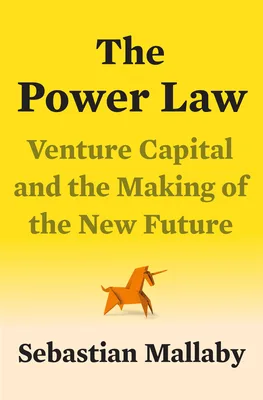
Details
Book description
In The Power Law, Sebastian Mallaby examines how venture capital helped shape Silicon Valley and the wider technology economy. The book centers on the investment logic behind a business in which most bets fail, while a small number of exceptional successes can outweigh the losses. Mallaby presents this uneven pattern—the “power law”—as a force influencing not only venture firms, but also the companies and innovations that reach the world.
Drawing on access to leading venture capitalists and firms including Sequoia, Kleiner Perkins, Accel, Benchmark, Andreessen Horowitz, Qiming, and Capital Today, Mallaby traces the development of technology investment in the United States and China. The account combines industry history with profiles of the strategies and decisions behind well-known successes and failures. Examples in the supplied description range from Apple’s early days to the venture funding associated with WeWork and Uber.
The book also considers the consequences of this investment model. Its appetite for outsized returns can encourage the pursuit of potential “unicorns” and amplify the influence of founders and investors. Mallaby addresses the biases embedded in a system that places high-stakes bets on unproven talent, including the underrepresentation of women and minorities, and contrasts the American and Chinese venture-capital landscapes. The result is an account that connects individual investment choices to broader questions about innovation, power, and economic change.
Written as a blend of reporting, analysis, and narrative, The Power Law is aimed at readers seeking to understand venture capital, Silicon Valley, technology entrepreneurship, and the forces shaping the modern economy. It offers both a history of influential investment firms and a framework for thinking about how risk, capital, and a handful of unusually successful ventures can help determine which ideas become consequential businesses.