The Orientalist: Solving the Mystery of a Strange and Dangerous Life
PLUS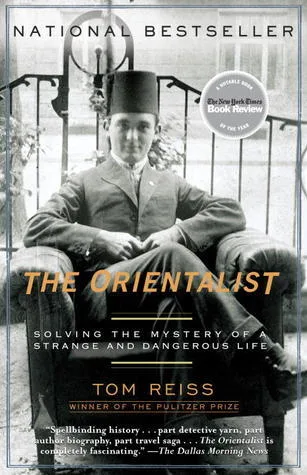
Details
Book description
Tom Reiss’s The Orientalist is a work of history, cultural biography, and literary investigation centered on Lev Nussimbaum, a Jewish writer who reinvented himself as a Muslim prince and published under the names Essad Bey and Kurban Said. Born into a wealthy family in Baku in 1905, Nussimbaum fled the Russian Revolution and made a name for himself in Europe with books about Islam, desert adventures, and political upheaval. His best-known work, Ali and Nino, tells a love story across ethnic and religious boundaries.
Reiss follows the discrepancies between Nussimbaum’s public identities and obscured past, tracing his life through exile, literary success, scandal, and political danger. The account also places his career against the upheavals of early twentieth-century Europe, including the rise of fascism and the pressures of antisemitism. Through Nussimbaum’s story, the book explores questions of identity, race, religious self-definition, and the ways political movements shape both lives and literary reputations.
The narrative is also an account of Reiss’s own research. Drawing on police records, correspondence, diaries, and notebooks, he pursues evidence across multiple countries and encounters people connected to Nussimbaum’s shifting world. This investigative structure gives the book the momentum of a literary mystery while grounding its revelations in historical research. Its scope reaches beyond one unusual life to include Baku’s oil wealth, European pan-Islamism, anti-Nazi networks, and other histories that Reiss argues have been overlooked.
For readers interested in biography, modern European history, literary mysteries, and the cultural politics of identity, The Orientalist offers an absorbing portrait of a writer whose life was as complex as the stories he told. It combines archival inquiry with a narrative style shaped by the strange turns and unresolved questions of its subject’s history.