Details
Book description
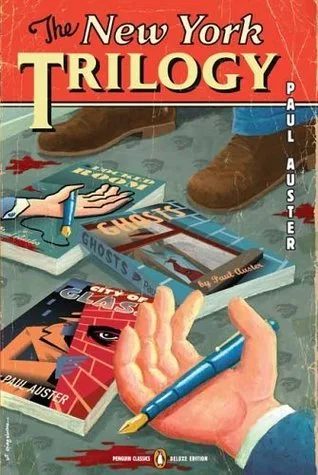
The New York Trilogy brings together three interconnected novels that reshape the conventions of detective fiction. Paul Auster uses the familiar machinery of surveillance, clues, and pursuit not simply to solve a crime, but to open larger questions about identity, interpretation, and what it means to be human. A seemingly straightforward act of following another person can lead into a world of coincidence and uncertainty, where the search itself becomes as important as any answer.
Drawing on the noir tradition while pushing beyond its usual boundaries, the trilogy turns investigation into an existential inquiry. Its linked stories explore how people make meaning from incomplete evidence and how the roles of watcher, subject, and investigator can become difficult to separate. The result is both gripping and unsettling: a work that offers the momentum of a mystery while questioning the assumptions that make mysteries readable.
Auster’s approach is intellectually alert and sharply controlled, combining the pull of classic detective fiction with the more open-ended concerns of postmodern literature. Rather than providing a conventional sequence of solved cases, the book uses coincidence, ambiguity, and the act of pursuit to unsettle readers’ expectations. Its three-part structure allows related ideas to echo and shift across the collection, creating a unified exploration of uncertainty and selfhood.
This book is suited to readers of literary fiction, noir, and unconventional mysteries, especially those interested in questions of identity and narrative. It will appeal to readers who enjoy detective stories that complicate the search for truth rather than simply resolving it, and to book groups looking for a formally inventive work with plenty to discuss.