The Moor's Account
PLUS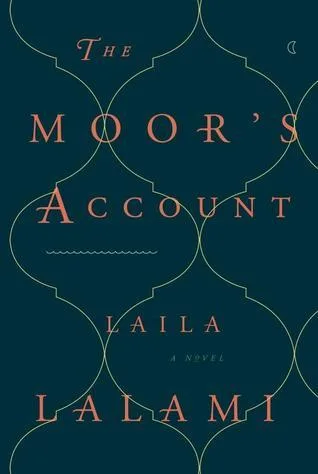
Details
Book description
Laila Lalami’s historical novel reimagines the early Spanish exploration of North America through the perspective of Mustafa al-Zamori, a Moroccan man known to the other survivors as Estebanico. In 1527, he joins Pánfilo de Narváez’s expedition as the enslaved companion of Andrés Dorantes. The expedition’s ambitions of wealth and renown give way to storms, disease, hunger, and conflict. Mustafa and three Spanish men survive, then spend years in captivity before escaping and traveling across the continent.
As the group crosses regions that are now part of the United States and Mexico, Mustafa’s abilities as a scout, interpreter, and translator become essential. The survivors eventually reach México-Tenochtitlán, where the Spanish men are asked to give testimony about their journey. Mustafa, despite his central role, is excluded. The novel builds its story around that absence, imagining the account he was never invited to provide and bringing into focus the experience of a man whose voice was treated as unworthy of record.
The book explores enslavement, survival, cultural encounter, and the power to shape historical memory. Its journey narrative is grounded in the documented expedition and the survivors’ return, while its central perspective offers a literary reimagining of events left out of the written account. The result is both an adventure across unfamiliar landscapes and a reflection on whose testimony is preserved—and whose is lost.
The Moor’s Account will appeal to readers of literary and historical fiction, especially those interested in the early history of the Americas, Spanish exploration, and stories that reconsider familiar historical narratives from marginalized perspectives.