The Immortal Life of Henrietta Lacks
PLUS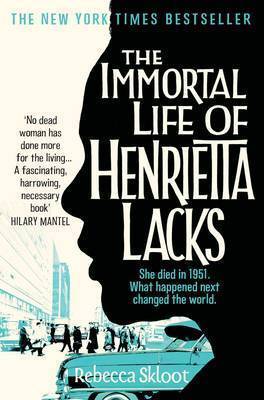
Details
Book description
Rebecca Skloot’s The Immortal Life of Henrietta Lacks traces the story of Henrietta Lacks, whose cells—known to researchers as HeLa—became the first immortal human cells grown in culture. Taken without her knowledge, they became a crucial research tool, contributing to work on the polio vaccine and studies of cancer, viruses, and the effects of the atom bomb, as well as advances including in vitro fertilization, cloning, and gene mapping. The cells were widely bought and sold, while Henrietta herself remained little known.
The book follows the Lacks family’s efforts to understand what happened. Henrietta’s relatives learned of the cells more than twenty years after her death, and later research involved her husband and children without informed consent. Skloot focuses in particular on Henrietta’s daughter Deborah, whose questions about her mother’s cells and the family’s treatment bring the personal consequences of scientific research into view.
Moving between scientific discovery and family history, Skloot examines the legacy of experimentation on African Americans, the emergence of bioethics, and legal questions about control of human biological materials. The narrative connects medical progress to the people whose cells made it possible, while considering the unequal distribution of its costs and benefits. Its intimate account of the Lacks family sits alongside a broader examination of medicine, race, consent, and ownership.
Written for general readers interested in science and society, this work of narrative nonfiction brings together medical history, family story, and ethical inquiry. It is suited to readers exploring the human dimensions of scientific research, the history of bioethics, and the lasting effects of unequal treatment in medicine.