Details
Book description
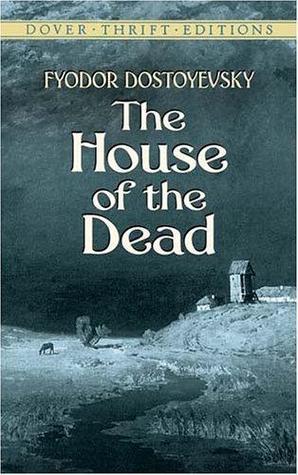
The House of the Dead is a semi-autobiographical novel shaped by Fyodor Dostoevsky’s experience of imprisonment and exile in Siberia. Its narrator, Alexandr Petrovitch Goryanchikov, recounts his years in a hard-labor camp after being convicted of murdering his wife. Rather than following a conventional plot, the book unfolds through his observations and recollections of prison life and the people around him.
As Goryanchikov comes to know the camp’s inhabitants, he encounters brutality and hardship alongside unexpected acts of human decency. The prisoners and guards emerge through the narrator’s gradual efforts to understand their characters and the institution that confines them. The prison setting becomes a lens for considering how people behave under severe constraints and how kindness and cruelty can coexist.
The novel draws on elements of Dostoevsky’s own experiences, giving its account of penal life an observational, memoir-like quality. Its episodic structure emphasizes accumulated impressions and changing insight rather than suspense driven by a sequence of plot twists. The result is both a portrait of a Siberian labor camp and a study of human nature, with questions about good and evil that resonate beyond the prison walls.
This classic is well suited to readers of Russian literature, literary fiction, and prison narratives, as well as those interested in the relationship between lived experience and fiction. Readers looking for psychological and moral reflection will find a work whose force lies in its attention to the varied lives of people living together in confinement.