Details
Book description
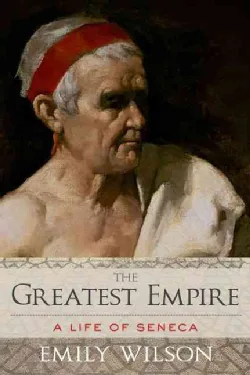
Seneca was one of the most influential writers and philosophers of ancient Rome, yet his life was bound up with the violence and uncertainty of imperial politics. In this biography, Emily Wilson examines a thinker whose work ranged from satire and tragedy to philosophy and arguments about virtue and anger, while tracing his place in the first dynasty of Roman emperors.
Seneca’s career brought him close to power and its dangers. Exiled by Claudius after a sex scandal, he later returned to Rome and served Nero as tutor, speech-writer, and adviser. Suspected of plotting against the emperor, he was condemned to die and took his own life. Wilson sets these episodes against Seneca’s writings and the political pressures that shaped his choices.
The book explores tensions at the heart of Seneca’s legacy: how to understand his violent tragedies alongside his advocacy of Stoic tranquility, and how to reconcile his teaching of simplicity and principle with the immense fortune he accumulated while serving an emperor regarded by many as a tyrant. Rather than smoothing over these contradictions, Wilson presents a life lived between philosophical ideals and political realities, asking what it means to hold to one’s principles under pressure.
Written for readers interested in Roman history, classical literature, and ancient philosophy, The Greatest Empire combines biography with an examination of Seneca’s ideas and works. It offers an accessible way into the complexities of a figure whose life and writings continue to raise questions about power, compromise, and the distance between aspiration and conduct.