Details
Book description
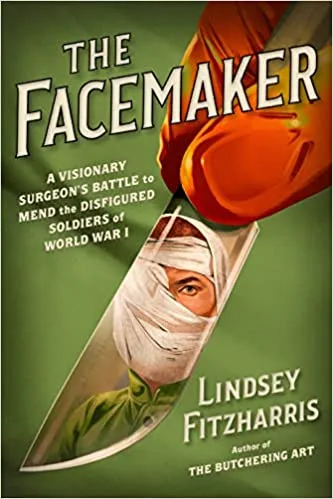
In The Facemaker, medical historian Lindsey Fitzharris tells the true story of Harold Gillies, the pioneering surgeon who devoted himself to reconstructing the faces of soldiers wounded in the First World War. As modern weapons inflicted injuries that medicine was not yet equipped to treat, the war left countless survivors with severe facial damage. Fitzharris traces how Gillies confronted this crisis and helped establish a hospital in Britain dedicated to facial reconstruction.
The book follows Gillies’s surgical work alongside the experiences of the injured men in his care. Their stories illuminate a society that could celebrate a soldier who lost a limb yet often recoiled from visible facial disfigurement. Against that backdrop, reconstruction meant more than repairing tissue: it could help restore a patient’s sense of self and place among others. The narrative presents the people behind medical progress as well as the physical and emotional consequences of war.
Fitzharris describes the ingenuity and practical challenges involved in an emerging field, showing how Gillies and his colleagues worked to rebuild what violence had destroyed. The account connects individual acts of care with the development of modern plastic surgery, while emphasizing the courage required of both patients and practitioners. Its subject is harrowing, but the story also attends to resilience, compassion, and the possibility of repair amid devastation.
Written as narrative medical history, The Facemaker will interest readers of biographies, First World War history, and the history of medicine. It is especially suited to readers curious about the origins of plastic surgery and the human lives behind surgical innovation. The book includes descriptions of severe war injuries and medical treatment.