The Drunkard's Walk: How Randomness Rules Our Lives
PLUS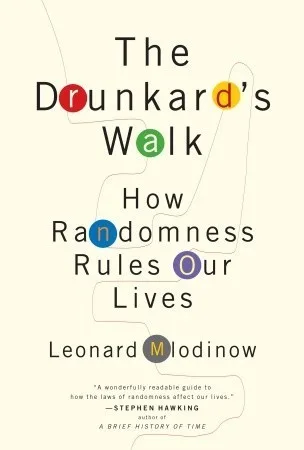
Details
Book description
Randomness shapes far more of everyday life than people tend to recognize. In The Drunkard’s Walk, physicist and author Leonard Mlodinow explores how chance and probability influence judgments and outcomes across settings ranging from classrooms and courtrooms to financial markets and supermarkets. The book examines why events that seem meaningful or predictable may be partly the product of randomness—and why that matters when interpreting success, failure, and evidence.
Mlodinow uses examples involving wine ratings, corporate success, school grades, and political polls to show how easily people can mistake chance for skill, certainty, or a reliable pattern. Alongside these illustrations, he introduces the history and ideas of probability through portraits of the thinkers who helped develop ways to understand uncertainty. The result is an accessible introduction to a subject with practical consequences for how we evaluate claims and make decisions.
A central concern is the gap between the way randomness works and the way people intuitively perceive it. By explaining psychological illusions that can lead to mistaken conclusions, Mlodinow encourages readers to question apparent patterns and consider the role of chance before drawing judgments. The book combines scientific explanation with narrative examples, aiming to make probability understandable without losing sight of its relevance to ordinary choices.
Written for general readers rather than specialists, The Drunkard’s Walk will appeal to readers interested in popular science, mathematics, decision-making, and the hidden uncertainties behind everyday outcomes. It offers a readable way to think more carefully about probability—and about how much confidence to place in the apparent explanations of success, failure, and events around us.