The Disappearing Spoon: And Other True Tales of Madness, Love, and the History of the World from the Periodic Table of the Elements
PLUS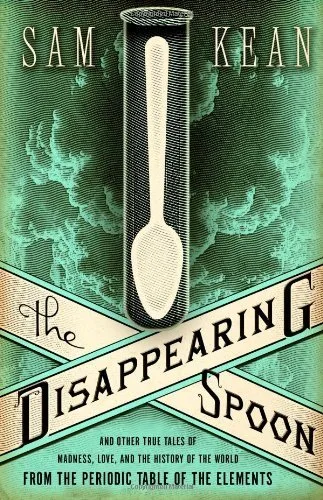
Details
Book description
The periodic table is more than a chart of chemical elements: in Sam Kean’s account, it becomes a guide to stories about scientific discovery and the people, ambitions, and mishaps behind it. The Disappearing Spoon draws on chemistry to explore episodes from science, history, finance, mythology, the arts, and medicine, tracing the elements’ roles in human affairs from the Big Bang onward.
Kean connects individual elements with memorable historical and scientific tales. The book asks why Gandhi disliked iodine, how radium threatened Marie Curie’s reputation, and why gallium is useful for laboratory pranks. Its title refers to one such trick: a spoon made from gallium can melt in hot tea, seeming to vanish. These examples show how the properties of elements can lead to surprising encounters between science and everyday life.
Blending accessible science with the lore of invention, investigation, and discovery, the book presents chemistry through narrative rather than as a bare sequence of facts. Its subjects include the frequently eccentric scientists who discovered elements, as well as the consequences those discoveries had beyond the laboratory. The result is a history of the periodic table told through human stories, with the elements themselves providing the organizing thread.
This book is suited to general readers curious about chemistry, the history of science, and the unexpected connections between scientific ideas and culture. Readers looking for an engaging, story-led introduction to the elements will find a broad tour of the periodic table and its place in human history.