Details
Book description
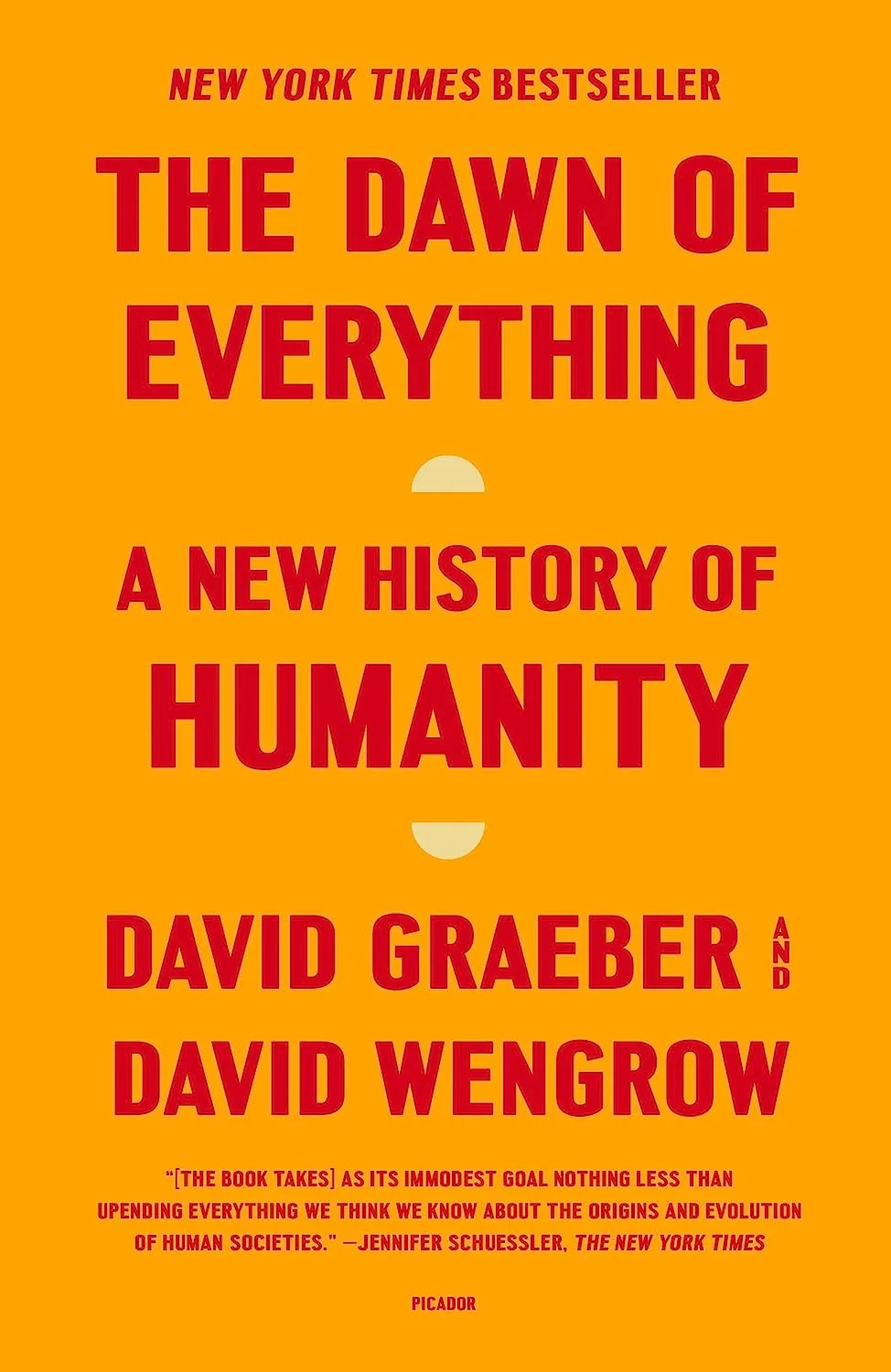
In The Dawn of Everything, David Graeber and David Wengrow challenge familiar accounts of how human societies developed. Drawing on archaeology and anthropology, they revisit assumptions about the rise of agriculture, cities, property, democracy, slavery, the state, and social inequality—and question the idea that history followed a single, inevitable path from simple communities to complex, hierarchical civilization.
The authors also examine how influential theories of social evolution took shape in the eighteenth century, in response to critiques of European society by Indigenous observers and intellectuals. Reconsidering that exchange, they invite readers to look beyond inherited descriptions of remote ancestors as either naturally peaceful innocents or inherently violent people who needed to be governed.
Rather than presenting social change as a straightforward march toward domination, Graeber and Wengrow consider the variety of political and economic arrangements people have created. Their account suggests that farming and urban life did not have only one outcome, and that human communities have repeatedly experimented with different forms of organization. The book’s wide-ranging argument combines historical inquiry with a broader question: how might a less predetermined understanding of the past expand what people can imagine for the future?
Written as an ambitious work of popular history and social thought, the book is suited to readers interested in anthropology, archaeology, political ideas, and the origins of human institutions. Its intellectual scope and focus on freedom and collective life will also appeal to readers seeking fresh perspectives on inequality and the possibilities of social change.