Details
Book description
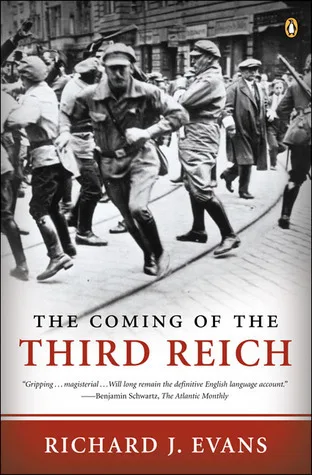
Richard J. Evans examines Hitler’s rise to power and the collapse of democratic civilization in Nazi Germany. Drawing on a wide body of scholarship alongside new research and interpretations, the book traces how political developments and conditions in Germany made a Nazi takeover possible by the early 1930s, while emphasizing that the outcome was not inevitable.
Rather than treating the rise of the Nazis as a foregone conclusion, Evans restores drama and contingency to the history. His account considers both the forces that prepared Germany for political upheaval and the developments through which Hitler and the Nazi movement came to power. In doing so, it offers a historical framework for understanding how a modern society could undergo such a profound transformation.
The book is a broad, analytical synthesis, written in a fluent and accessible style while engaging with extensive historical research. Its scope and emphasis on interpretation make it suitable for readers seeking a substantial account of Nazi Germany’s origins, as well as students and general readers interested in twentieth-century European history, dictatorship, and the fragility of democratic institutions.