Details
Book description
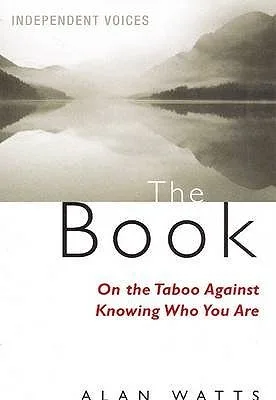
In The Book: On the Taboo Against Knowing Who You Are, Alan W. Watts examines a basic question of human life: what does it mean to be an individual self? Drawing on and adapting the Hindu philosophy of Vedanta, he challenges the familiar picture of people as isolated beings set apart from the world around them. The book presents this sense of separation as a misunderstanding of personal identity, rather than an unquestioned fact.
Watts connects that misunderstanding to the way people relate to the wider world. When humans imagine themselves as fundamentally separate from nature, the world outside can seem hostile or merely available for use. The description frames this outlook as one source of human conflict, the misuse of technology, and the subjugation of the natural world. In response, Watts offers a different perspective on the self and its place in existence.
The book’s approach is philosophical and interpretive: it distills Vedantic ideas for contemporary Western readers and uses them to consider identity, consciousness, interdependence, and humanity’s relationship with nature. Rather than presenting a conventional narrative, it serves as an accessible primer on a central question of existence. Its argument invites readers to reconsider the boundary they draw between themselves and the universe.
This book is suited to readers interested in philosophy, Hindu thought, spirituality, and the problem of personal identity, including those seeking an introductory encounter with Vedanta. It may also appeal to readers reflecting on human conflict and the environmental consequences of treating nature as separate from ourselves.