Details
Book description
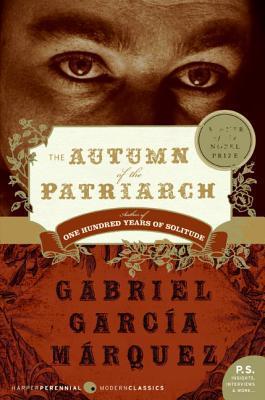
In *The Autumn of the Patriarch*, Gabriel García Márquez explores the agony and death of a dictator through a story that moves in cycles, returning to familiar events in altered forms. The novel presents dictatorship not as a single sequence of political milestones but as an enduring condition, shaped by power, memory, decay, and the lives of those caught within its reach.
Its experimental structure is central to the reading experience. The narrative unfolds in six large sections, without dialogue or conventional paragraph breaks, using repetition and accumulation to create a dense, continuous flow. Each return to the central story shifts its perspective and texture, blending the particular fate of a ruler with a broader meditation on authoritarian power and its consequences.
The novel’s language is richly descriptive and lyrical, combining the recognizably real with a mythic sense of scale. García Márquez draws on the realities of Latin America while giving the story a universal resonance. Written against the historical background of Francisco Franco’s death in Spain, the book reflects on the long shadows cast by dictators and the strange persistence of power even as it approaches its end.
This is a demanding, formally adventurous work for readers of literary fiction, political fiction, and magical realism. It is especially suited to readers interested in experimental narrative, lyrical prose, and novels that examine dictatorship through atmosphere and recurring images rather than straightforward chronology.