The Art of Statistics: Learning from Data
PLUS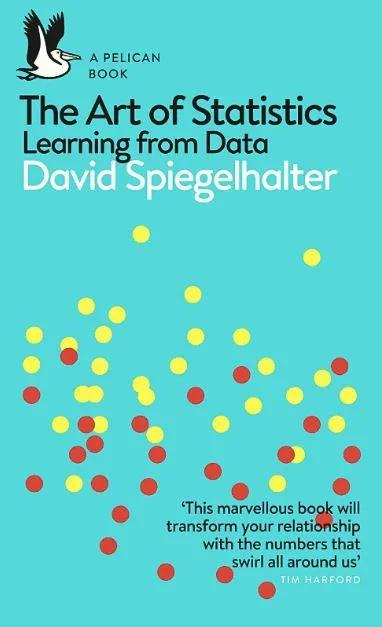
Details
Book description
How can statistics help us make sense of the world, especially when data are incomplete and claims are presented with more certainty than they deserve? In The Art of Statistics: Learning from Data, David Spiegelhalter introduces the principles that help readers assess evidence and draw reliable conclusions. The book also considers why statistical understanding matters in an era shaped by big data and data science.
Using real-world questions to make abstract ideas concrete, Spiegelhalter explores how statistical reasoning can illuminate subjects as varied as identifying the luckiest passenger on the Titanic, assessing whether a cancer screening programme is beneficial, and asking whether a notorious serial killer might have been detected earlier. Other examples consider hospital survival rates, the number of trees on Earth and the familiar claim that older men have bigger ears. These cases show how statistics can be used to investigate questions that cannot be answered by intuition alone.
The book’s central concern is not simply how to calculate, but how to interpret: what data can tell us, where uncertainty remains, and how statistical claims may be distorted or sensationalised, particularly in the media. Its accessible, question-led approach makes statistical ideas relevant to everyday judgments as well as scientific inquiry.
Written for general readers seeking a clearer grasp of evidence, this is an introduction to statistical thinking and data literacy rather than a specialist technical manual. It will also interest readers curious about how data science and statistical methods are used to understand practical problems across health, society and the natural world.