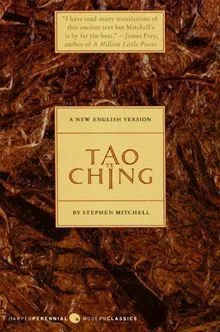
Details
Book description
The Tao Te Ching is a classic Chinese text associated with Lao Tzu and a foundational work in the study of Taoist thought. Its concise passages explore the Tao—the way or underlying course of things—and invite reflection on how people might live in relation to it. The text is also known as a work of religious and philosophical significance, though its authorship and history remain subjects of scholarly debate.
Rather than presenting a conventional narrative, the book offers brief, concentrated reflections. Its form encourages readers to pause over ideas and consider them from different angles. The text’s lasting appeal lies in its treatment of questions about the nature of the Tao and the place of human life within a larger order.
The origins of the work are not settled. The available research notes that the oldest excavated portion dates to the late fourth century BC, while the text’s authorship and the date of its composition or compilation remain debated. This uncertainty is part of the context for reading it: the Tao Te Ching is both an enduring classic and a text whose formation continues to be examined by scholars.
This edition is suited to readers interested in Chinese classics, Taoist thought, religion, and philosophy. It can serve as an introduction to a major work of Chinese intellectual and spiritual tradition, as well as a starting point for readers who want to reflect on its compact and influential ideas.