Selling Fear: Counterterrorism, the Media, and Public Opinion
PLUS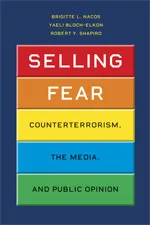
Details
Book description
Selling Fear examines the relationship between counterterrorism, news media, and public opinion. Its central concern is how fear is communicated and used in public life, considering news both as a commodity and as a public good—and as a force that can shape political understanding. The book explores the media’s role in presenting terrorism and government responses to it, with attention to the ways public perceptions of danger may influence political debate and policy.
The chapters address the tension between civil liberties and national security, the media and the case for the Iraq War, efforts to prevent attacks at home, and public preparation for possible future attacks. Together, these subjects trace the politics of counterterrorism through the interactions of news coverage, government messaging, and public opinion. The book also considers the problem of communicating about terrorism without either minimizing threats or encouraging disproportionate fear.
The authors approach these issues as matters of mediated politics, connecting media practices with questions of persuasion, security, and democratic debate. A postscript considers President Obama and the possibility of “underselling” fear, extending the book’s examination of how political leaders frame the threat of terrorism. Rather than treating media coverage as a neutral backdrop, the book places it at the center of debates over how societies understand and respond to danger.
This work is suited to readers interested in political communication, terrorism and counterterrorism, public opinion, journalism, and the balance between civil liberties and national security. Its focus on media influence and political framing makes it relevant to students and researchers in political science, media studies, and related social sciences, as well as general readers seeking a focused analysis of the public politics of counterterrorism.