Said the Dead
PLUS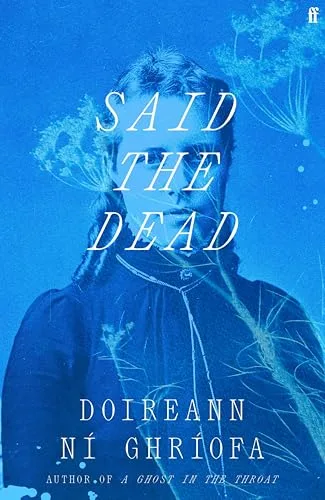
Details
Book description
In Cork, Ireland, a derelict Victorian mental hospital is being converted into apartments. A passerby has long felt uneasy near the building; as she encounters a sequence of signs and fragments, she follows an impulse that draws her away from her everyday roles as mother, spouse and daughter. The hospital’s past begins to press into her present, and her investigation becomes a journey among the women whose lives were recorded within its walls.
The women’s voices emerge through archives and old casebooks, as well as through the hospital’s stairwells and walls. The narrator feels a particular connection to one of them, and the story traces how that bond deepens her attention to the institution and its history. The description frames the book as both an inquiry into the legacy of the asylum and a personal search for what the narrator may yet make of her future.
Time-traversing and resistant to a single genre, Said the Dead blurs the boundaries between past and present, imagination and reality, history and fiction. Its haunting is not only supernatural: it is also an act of listening to women whose experiences have been preserved in institutional records, and of considering how those records shape what can be known. The book’s stated mood is one of intense attention and tenderness, with a focus on memory, identity and the risks involved in investigating the past.
This literary ghost story and reclamation will suit readers drawn to formally adventurous fiction, haunted places, archival mysteries and stories that connect individual lives with histories of women and institutions. It offers a reflective, atmospheric reading experience for those interested in the uncertain border between the documented and the imagined.