Details
Book description
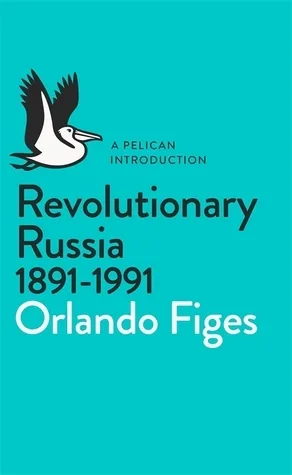
In Revolutionary Russia, 1891-1991, historian Orlando Figes surveys a century of upheaval, from the devastating famines of 1891 to the end of the Soviet experiment. The book asks what caused the Russian Revolution, whether it achieved its aims, and why its consequences remain significant. Rather than treating revolution as a single moment, Figes presents it as a prolonged effort to remake the state and society across successive regimes.
The account follows the struggle of Tsarist and Communist rulers to consolidate power over a vast country. Figes emphasizes the scale of state-building and the coercive methods used to mobilize and control millions of people. War and peace, efforts to suppress actual and perceived enemies, and the pressures of governing all form part of this broad history. The narrative traces how exhaustion, corruption, and intellectual bankruptcy ultimately brought the experiment to an end.
Written as a concise account of a complex period, the book connects political transformation with the human and social costs of rule. It also considers how Russia’s revolutionary century shaped hopes and fears far beyond its borders, and why the Soviet past continues to matter as it recedes from living memory.
This book is suited to readers seeking an accessible overview of modern Russian history, the Russian Revolution, and the rise and decline of the Soviet state. It may also interest students and general readers exploring revolutions, authoritarian state-building, and the long-term consequences of political upheaval.