Details
Book description
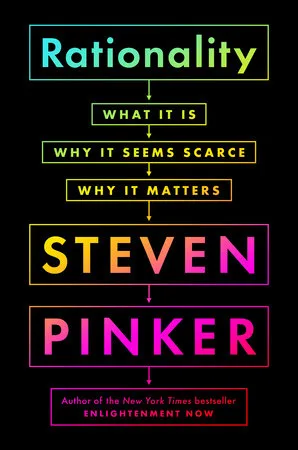
In Rationality: What It Is, Why It Seems Scarce, Why It Matters, Steven Pinker examines how people reason, why irrational ideas persist, and what rational thinking can contribute to individual and collective life. He challenges the view that human beings are simply irrational, pointing instead to our capacity to discover natural laws, improve our lives, and develop standards for sound reasoning. At the same time, he asks why societies capable of such achievements can also be drawn to misinformation, medical quackery, and conspiracy theories.
Pinker argues that people often reason sensibly in familiar, everyday circumstances but do not consistently use the more powerful tools of thought developed over time. The book introduces logic, critical thinking, probability, correlation and causation, and methods for revising beliefs and making choices. It presents these ideas as practical resources for evaluating evidence and deciding what to believe, both on one’s own and with others.
The discussion also considers how individually understandable motives—such as self-interest, group loyalty, and the appeal of uplifting stories—can combine to produce irrational outcomes across society. Pinker emphasizes the role of shared norms that support objectivity and truth, connecting rationality with better personal decisions and more constructive public life. The book’s approach is explanatory and accessible, combining ideas from reasoning and psychology with Pinker’s characteristic insight and humor.
Written for general readers interested in clearer thinking, public debate, and the forces shaping social progress, Rationality offers an introduction to reasoning tools and their wider consequences. It is suited to readers seeking to assess claims more carefully and understand why rational habits matter beyond the individual.