Details
Book description
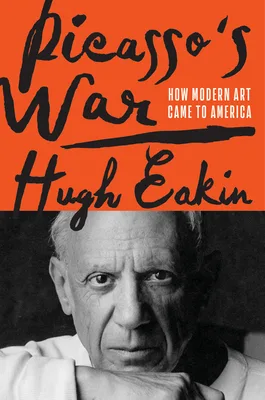
In January 1939, Pablo Picasso was celebrated in Europe but still faced widespread disdain in the United States. Within a year, Americans were clamoring to see his work. In Picasso’s War, Hugh Eakin traces the people, conflicts, and changing fortunes behind that transformation—and the shift of the international art world from Paris to New York.
The story begins with John Quinn, an Irish American lawyer who set out to assemble a major collection of Picasso’s work. After Quinn’s dream of a museum failed, his ambitions found a new champion in Alfred H. Barr Jr., the young director of New York’s Museum of Modern Art. Eakin follows their shared project through popular hostility, the Depression, Parisian intrigues, and Picasso’s own resistance.
As Hitler’s campaign targeted Jews and modern art, Barr formed a fraught alliance with Picasso’s persecuted dealer, Paul Rosenberg. Their efforts helped bring important paintings out of Europe and culminated in the exhibition Picasso: Forty Years of His Art. Eakin presents the exhibition as a turning point: it introduced Picasso to a broad American audience, helped establish MoMA’s identity, and altered the country’s taste in modern art.
Combining historical research with narrative storytelling, the book examines the links between artistic ambition, museum-building, politics, and the fate of cultural works during wartime. It is suited to readers interested in Picasso, modern art, the history of museums, and the forces that shaped American cultural life.