Pathogenesis: A History of the World in Eight Plagues
PLUS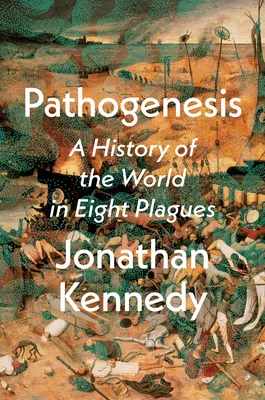
Details
Book description
In Pathogenesis: A History of the World in Eight Plagues, sociologist and public health scholar Jonathan Kennedy makes infectious disease a central force in the story of human civilization. Drawing on research in genetics, economics, sociology and anthropology, he examines how microbes have shaped major historical transformations, challenging accounts that place human reason and ambition at the heart of social change.
The book follows eight disease outbreaks and their far-reaching consequences, connecting epidemics with developments that include the decline of the Neanderthals, the growth of Christianity and Islam, the shift from feudalism to capitalism, European colonial expansion and the rise of the United States. One example considers how Christian communities’ care for the sick during pandemics in the Roman Empire helped a small religious movement grow. Across these episodes, Kennedy explores how the effects of disease intersected with social organization, political power and historical change.
Wide-ranging and interdisciplinary, Pathogenesis brings together evidence from several fields to reconsider familiar narratives of progress and power. Its central argument is that bacteria and viruses have influenced the course of history in ways that are often overlooked. The book also places the present in this longer perspective, inviting readers to consider how disease might shape another turning point in human affairs.
Written for general readers interested in world history, public health and the forces behind social change, this is an accessible work of historical interpretation. It will appeal to readers curious about the connections between epidemics, religion, economics, empire and the development of modern societies.