Details
Book description
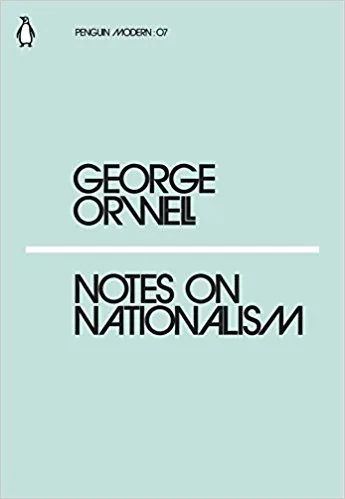
In “Notes on Nationalism,” George Orwell examines how political loyalties can distort thought and judgment. The essay considers nationalism not simply as attachment to a country, but as a habit of mind that encourages people to divide the world into rival camps and treat their own side’s claims with indulgence. Orwell’s concern is the way this allegiance can turn political argument into prejudice and make clear-eyed assessment difficult.
The book explores the connections between patriotism, power, and belief, asking how people sustain convictions even amid uncertainty about what is happening. Orwell focuses on the effects of partisan thinking: facts may be ignored or reshaped when they conflict with loyalty, while opposing groups are judged by standards not applied to one’s own. His argument is directed at patterns of thought that can arise across political positions, rather than at a single ideology alone.
Written as a compact work of political analysis, the essay is known for its biting, direct reflections on public life and human psychology. Its central questions remain relevant to readers interested in how identity and political commitment influence perception, debate, and the interpretation of events. The concise format makes it suited to focused reading as well as discussion alongside broader writing on political ideas.
This edition is part of Penguin Modern, a series presenting short works by international writers. It will appeal to readers of political essays, Orwell’s nonfiction, and critical writing on nationalism, patriotism, propaganda, and the relationship between belief and evidence.