Details
Book description
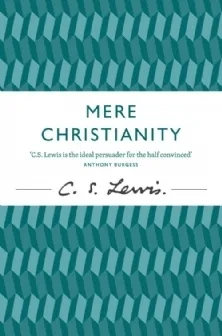
In Mere Christianity, C. S. Lewis presents a reasoned case for the central beliefs of Christianity, drawing on a series of broadcast talks he gave during World War II. The book is intended to make Christian belief intelligible to both committed believers and readers who are uncertain or unconvinced, by examining questions that connect religious faith with everyday experience.
Lewis begins with moral consciousness and the human sense of right and wrong, considering what these judgments may suggest about the existence of a moral being. From this starting point, he explores Christian ideas alongside questions of human nature and conduct. The subjects include morality, sin, forgiveness, faith, hope, generosity and kindness, as well as marriage.
The approach is explanatory and argumentative: Lewis aims to lay out a rational case rather than assume that readers already share his convictions. The collection’s appeal lies in its effort to address intellectual objections while making abstract religious ideas accessible through familiar moral questions. It offers readers an introduction to foundational Christian thought and a framework for considering how belief might shape personal choices and relationships.
Mere Christianity is suited to readers interested in Christian theology, religious philosophy and accessible discussions of faith, including those approaching Christianity with questions or reservations. It can also serve as a starting point for readers seeking a clear account of the beliefs Lewis regards as central to the Christian tradition.