Magnificent Rebels: The First Romantics and the Invention of the Self
PLUS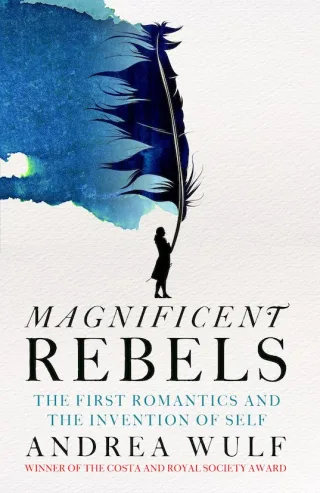
Details
Book description
In 1790s Germany, a circle of writers, poets and philosophers began placing the self at the center of their ideas, art and lives. In *Magnificent Rebels*, Andrea Wulf traces how their conversations and creative work helped launch Romanticism and reshape thinking about individual freedom, identity and human potential. The book presents this intellectual movement as a revolution of the mind, with consequences that remain relevant to how people understand autonomy and responsibility today.
The group includes poets Goethe, Schiller and Novalis; philosophers Fichte, Schelling and Hegel; the Schlegel brothers; and naturalist Alexander von Humboldt. At its center is Caroline Schlegel, whose influence helped spark discussions about the self, nature, identity and freedom. Wulf follows the circle through its passionate relationships, disagreements, grief and ambitions, showing how personal lives and intellectual exchange intersected in the making of a cultural movement.
The book explores the Romantics’ belief in the creative potential of the individual, their aspirations for art and science, and their sense of the unity of nature. It also considers the enduring tension between self-fulfillment and narcissism, and between individual rights and obligations to others and the future. Rather than treating freedom as an uncomplicated ideal, Wulf examines both its promise and its risks.
Written as narrative history, *Magnificent Rebels* brings readers into the personalities and debates of the period while connecting Romantic ideas to contemporary questions about self-determination. It is suited to readers interested in intellectual and cultural history, Romanticism, the history of ideas, and the lives of influential European writers and philosophers.