Details
Book description
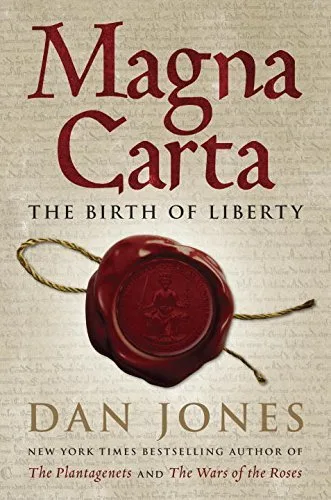
Dan Jones examines the Magna Carta not as an inevitable founding charter of liberty, but as a document born from a specific political crisis. In 1215, England’s King John faced a group of barons angered by heavy taxes and repeated foreign wars. The agreement they compelled him to accept was, in practice, a peace treaty shaped by immediate interests—including tax relief and fishing rights—and it failed within two months of confirmation.
The book follows the charter’s creation, its brief and troubled life, and the war that engulfed England after its failure. Jones places these events in their historical setting, exploring what the Magna Carta meant to those who made it and how its reputation grew long after the original agreement collapsed. A central question is how a document of such limited and practical beginnings came to be revered as a landmark in the history of liberty.
The account also considers the Magna Carta’s enduring political legacy. Its principles are associated with later constitutional traditions, including the Bill of Rights and the United States Constitution. Jones connects the charter’s history with the ways later generations interpreted it, while distinguishing those later meanings from the circumstances of 1215. The result is a compact history of both an eventful year and the making of a powerful historical symbol.
Written in a lively, action-focused style, this concise work is suited to readers seeking an accessible account of medieval English history, the origins of constitutional ideas, or the complex afterlife of a document often treated as a straightforward declaration of freedom. It will also interest readers of focused histories centered on pivotal years and turning points.