Leadership : Six Studies in World Strategy
PLUS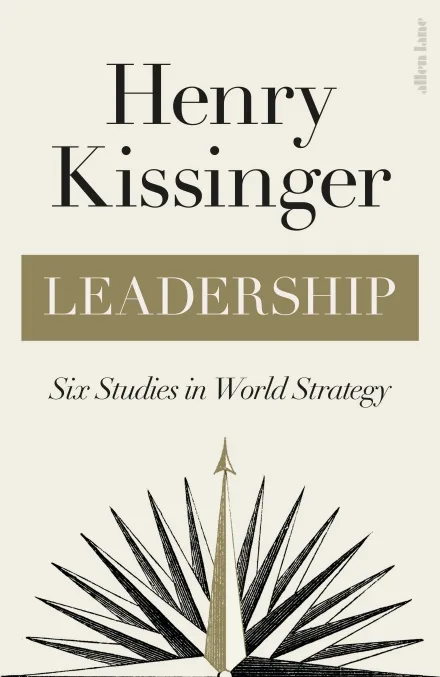
Details
Book description
In Leadership: Six Studies in World Strategy, Henry Kissinger examines how six political leaders shaped their countries and influenced international affairs. The book presents leadership as a balance between the lessons of the past and judgments about an uncertain future, guided by the values and aspirations of the people being led.
Kissinger organizes his portraits around distinct approaches to statecraft. Konrad Adenauer’s postwar restoration of Germany is framed as a strategy of humility, while Charles de Gaulle’s effort to renew France’s standing represents a strategy of will. Richard Nixon’s Cold War diplomacy is discussed as a strategy of equilibrium; Anwar Sadat’s pursuit of peace in the Middle East as a strategy of transcendence; Lee Kuan Yew’s development of Singapore as a strategy of excellence; and Margaret Thatcher’s renewal of Britain as a strategy of conviction.
The studies combine historical analysis with Kissinger’s public experience and personal knowledge of the leaders and events he describes. Rather than offering a general manual of management, the book considers how particular leaders responded to the circumstances of their times and used strategy to pursue national objectives. Its concluding reflections address world order and the continuing importance of leadership.
This work is suited to readers interested in political history, diplomacy, international relations, and the ideas and practices of statecraft. It will also appeal to readers seeking comparative portraits of influential twentieth-century leaders and an account of how political judgment connects national purpose with global strategy.