How the South Won the Civil War: Oligarchy, Democracy, and the Continuing Fight for the Soul of America
PLUS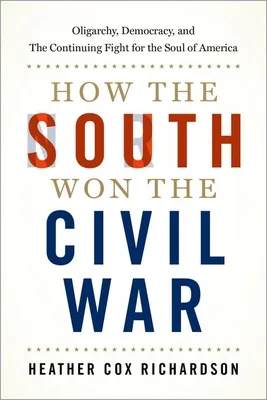
Details
Book description
In How the South Won the Civil War, historian Heather Cox Richardson examines the tension between the United States’ democratic ideals and the persistence of racial hierarchy and oligarchic power. Her central argument is that the Civil War ended slavery but did not permanently dislodge the political and economic forces that had sustained the South. Those forces found new opportunities in the West, where expansion, the seizure of Mexican lands, and the treatment of Native Americans reinforced racial hierarchies.
Richardson traces connections between Southern plantation wealth and Western extractive industries, including mining, cattle, and oil. She follows the changing image of the ideal American—from the Eastern yeoman farmer to the Western cowboy—and considers how that mythology helped frame resistance to government and claims of individual liberty. The account links these developments to the growth of Western political influence during the New Deal and World War II, and to the later alliance between Western conservatives and Southern politicians.
Combining historical narrative with political analysis, the book challenges the idea that the Civil War settled the nation’s conflict over equality and subordination. It considers how the promises of the Reconstruction amendments coexisted with enduring systems of exclusion, and how political movements drew on older arguments about race, power, and self-government. Richardson presents the past as essential context for understanding continuing debates over democracy and equal opportunity.
This work is suited to readers of American history and political history, as well as those interested in the Civil War’s legacy, the development of modern conservatism, and the continuing contest over who benefits from the nation’s democratic promises.