Details
Book description
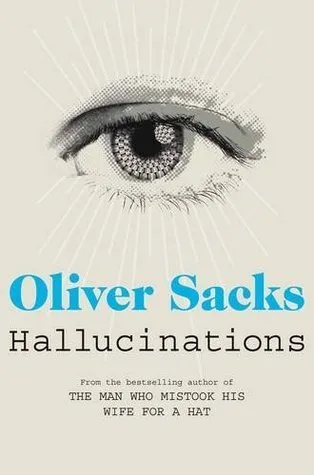
Hallucinations examines sensory experiences that seem real but arise from the brain rather than the outside world. Oliver Sacks challenges the assumption that hallucinations are necessarily signs of madness, describing them instead as a varied and often shared part of human experience. The examples range from the shimmering zigzags associated with visual migraine to vivid experiences connected with fever, injury, drugs, sensory deprivation, exhaustion, and grief.
Drawing on his own experiences and clinical cases from his patients, Sacks explores how these perceptions occur and what they may reveal about the brain. He also considers hallucinations in historical and cultural contexts, discussing their possible connections to mythology, literature, and religious experience. Historical examples, including Dostoevsky and Lewis Carroll, help widen the inquiry beyond the clinic.
Written in Sacks’s characteristic blend of medical observation and human interest, the book approaches a puzzling subject with curiosity rather than sensationalism. Its focus is both scientific and cultural: it asks how the brain constructs perception, why unusual sensory experiences happen, and how they have shaped human understanding and expression.
Hallucinations is suited to readers interested in neuroscience, psychology, medicine, and the ways human perception influences culture. It offers an accessible exploration for general readers as well as those curious about the lived experiences behind neurological phenomena.