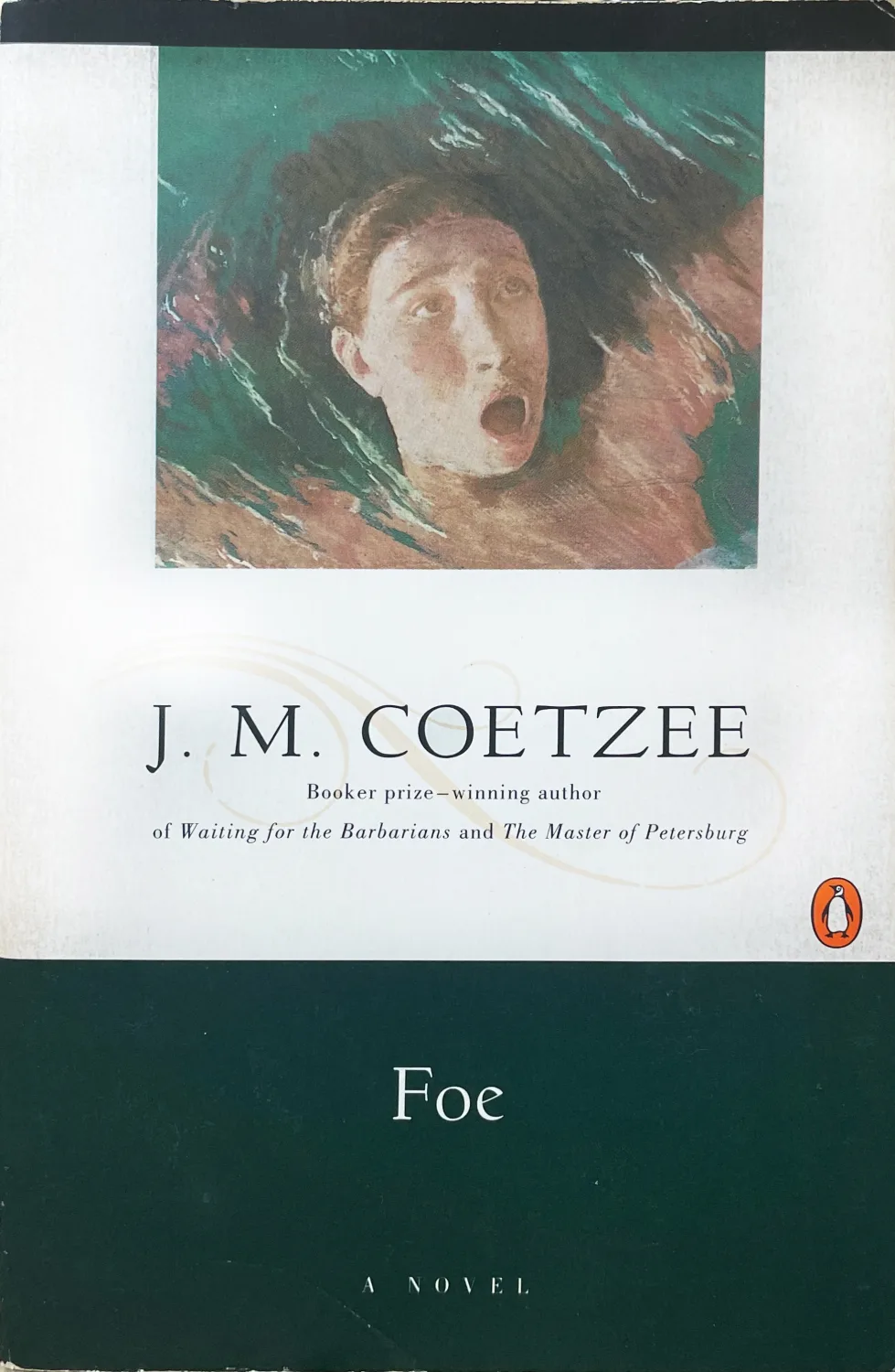
Details
Book description
In Foe, J. M. Coetzee reimagines the story of Robinson Crusoe through the perspective of Susan Barton, a castaway whose account challenges the familiar shape of the island tale. After drifting ashore on a remote island, Susan encounters Cruso and Friday, Cruso’s tongueless slave. She lives with them until a passing ship rescues the survivors and carries her and Friday back to London; Cruso does not survive the journey.
Determined to make her experience known, Susan seeks out the writer Daniel Foe and asks him to tell her story. But the memories she wants preserved are not simply his to arrange. Cruso is dead, Friday cannot speak, and Foe is intent on reshaping her account. Susan’s effort to hold on to what happened becomes a struggle over who gets to tell a story—and what may be lost when lived experience is turned into narrative.
The novel revisits a canonical adventure story to explore authorship, memory, silence, power and the uncertain boundary between truth and invention. Its literary approach is controlled and intricate, using the familiar premise of an island castaway to question the authority of the stories people inherit and the versions writers create. Rather than offering a straightforward retelling, Coetzee makes storytelling itself the central source of tension.
Foe is suited to readers of literary fiction, postcolonial reinterpretations and novels that examine narrative, voice and representation. Readers familiar with Robinson Crusoe will find a pointed reconsideration of its conventions, while those approaching it independently can follow Susan’s pursuit of an account that will do justice to her experience.