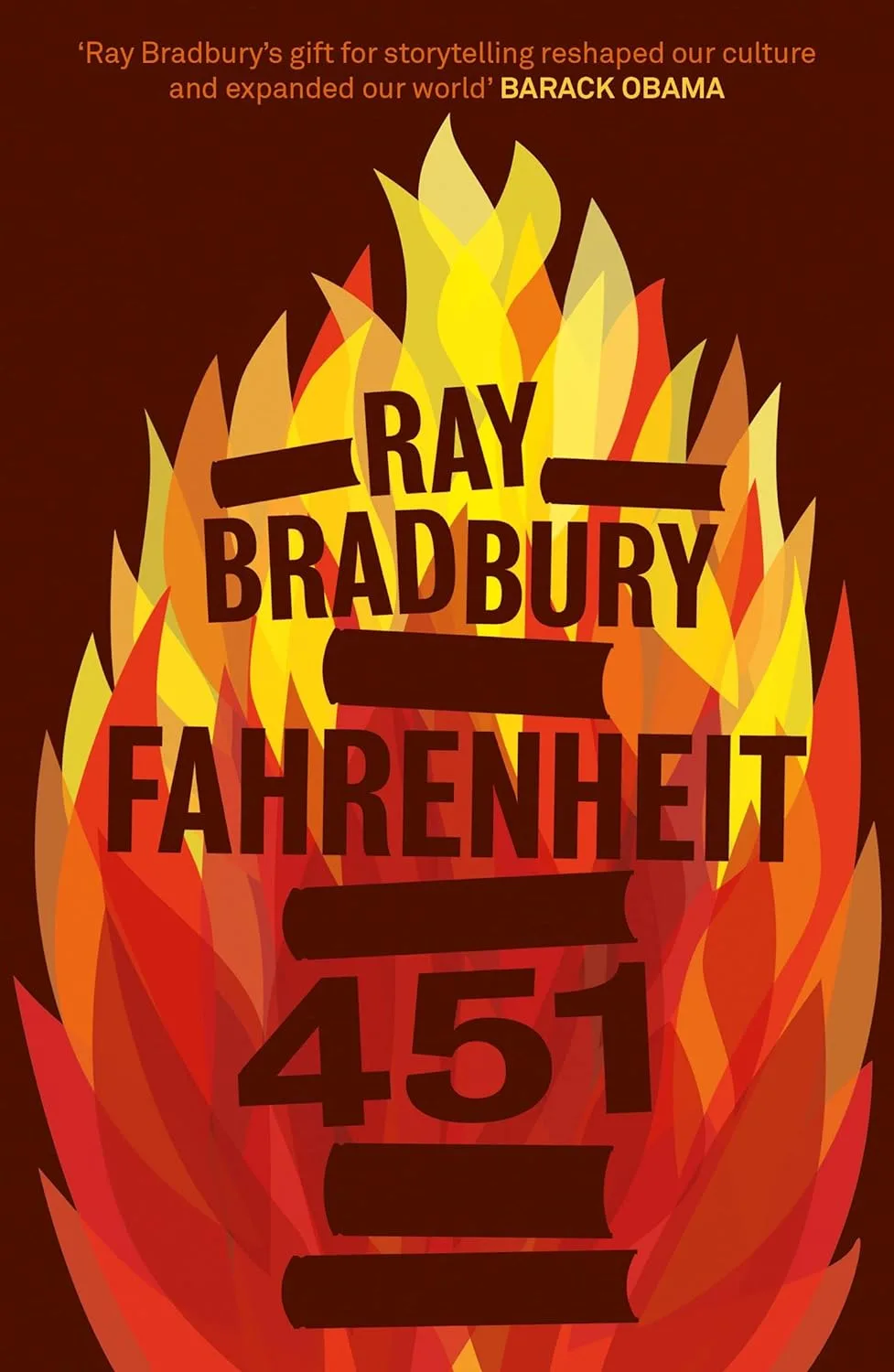
Details
Book description
In a strictly controlled society where books are forbidden and independent thought is treated as dangerous, Guy Montag works as a fireman—but his job is to burn books rather than extinguish fires. The official slogan that names authors and calls for their works to be reduced to ashes reflects the rules that shape his profession and daily life. For Montag, the smell of kerosene is bound up with his identity and his accepted way of living.
Ray Bradbury’s Fahrenheit 451 presents a dystopian world organized around censorship and control. Its central concerns include the suppression of ideas, the dangers of conformity, and the place of books in a society that fears thought. The premise invites readers to consider what is lost when reading and intellectual independence are made unacceptable.
Bradbury is known for imaginative fiction that combines social criticism with a poetic style. Here, that approach gives the novel’s stark premise a literary and reflective dimension. The book is suited to readers of dystopian and speculative fiction, as well as those interested in censorship, social control, and stories that examine the power of literature.