Details
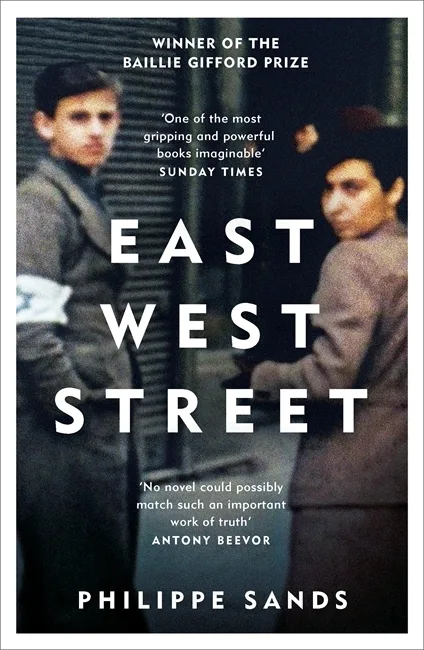
Book description
In East West Street, Philippe Sands investigates the origins of two legal concepts that reshaped the world’s response to mass violence: genocide and crimes against humanity. The story centers on Lviv, a city whose changing names and borders reflect its position between east and west. Once part of the Austro-Hungarian Empire, it became a major cultural center where two future legal thinkers studied at the same university, without knowing each other, and developed ideas that would later influence international law.
Sands combines this intellectual history with a personal family inquiry. He follows the mysterious story of his grandfather and his movement through Europe in the shadow of Nazi atrocities, connecting private memory to the broader history of the Holocaust and the legal effort to confront mass murder. The book’s narrative moves between the lives and ideas of the jurists and the author’s search into his own family past, showing how personal histories intersect with the creation of legal principles.
The result is both a work of legal and European history and a family memoir shaped as an investigation. Sands writes with attention to historical detail while tracing the human consequences behind abstract legal terms. The book explores how law seeks to name and address crimes against individuals and groups, and how the histories of a city, a family, and a legal idea can illuminate one another.
East West Street is suited to readers interested in the Holocaust, European history, international law, genocide studies, and family memoir. It offers an accessible route into the development of modern legal concepts while preserving the emotional dimension of a personal search through a turbulent past.