Details
Book description
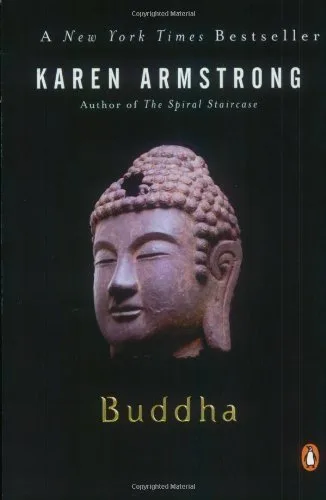
In Buddha, Karen Armstrong presents an introduction to the life and teachings of Siddhatta Gotama, drawing on ancient writings that blend historical accounts, biography and myth. Rather than treating those sources as a fully settled record, she distils the principal episodes they preserve, including Gotama’s birth, his departure from his wife and son, his enlightenment beneath a tree, his influence and the divisions that arose among his followers. The account concludes with his serene death.
Armstrong also explains central Buddhist ideas and the vocabulary used to express them. These include anatta, or no-soul; kamma, the consequences of actions; samsara, the ongoing cycle of existence; dhamma, a law or teaching reflecting fundamental principles; and nibbana, described as a cooling of the ego. The book considers Buddhism as a tradition that does not depend on belief in a personal god and explores the psychological character of its teachings.
Alongside the biographical introduction, the book presents Buddhist thought as a way of understanding selflessness and the simple life. Its focus is both historical and interpretive: it outlines what ancient accounts say about the Buddha while making key concepts accessible to readers new to the subject. The result is a concise guide to a spiritual thinker whose teachings shaped a major religious tradition.
This book is suited to general readers seeking an accessible starting point in Buddhist history and philosophy, as well as readers interested in comparative religion and spiritual ideas. It offers an introductory overview rather than an exhaustive scholarly study, bringing the Buddha’s life and the core concepts of Buddhism together in a compact, explanatory account.