Are We Smart Enough to Know How Smart Animals Are?
PLUS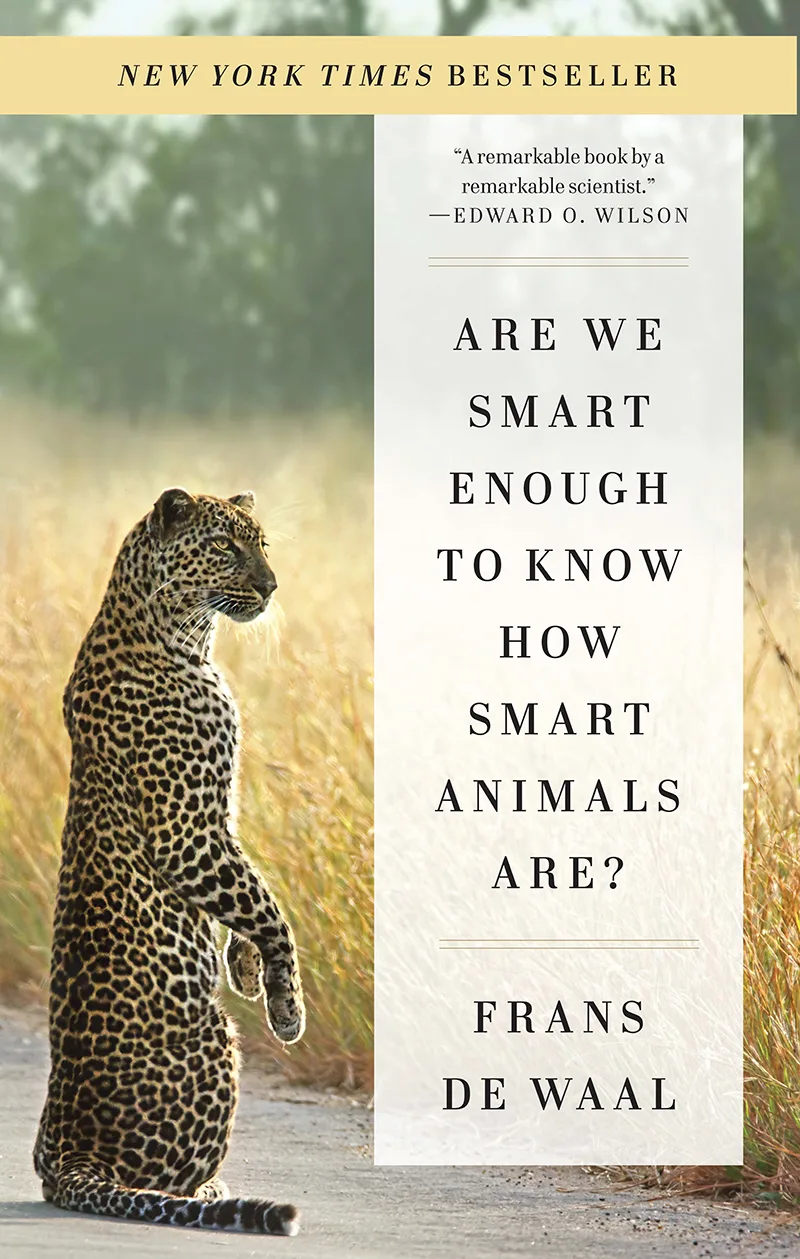
Details
Book description
Are We Smart Enough to Know How Smart Animals Are? examines what animal cognition can reveal about intelligence—and how human assumptions have shaped the way researchers interpret it. Frans de Waal draws on examples from a wide range of species, including crows, dolphins, parrots, sheep, wasps, bats, chimpanzees, and bonobos, to explore the complexity of nonhuman minds and the difficulty of measuring their abilities fairly.
The book highlights striking behaviors: octopuses using coconut shells as tools, elephants distinguishing people by gender and language, and a young chimpanzee displaying remarkable visual memory. These examples invite readers to consider intelligence as something that takes different forms across species, rather than a single human-centered capacity. De Waal’s discussion asks not only what animals can do, but also whether the tests and comparisons used to judge them are suited to their ways of thinking.
Fascinating and accessible in approach, the book brings animal behavior and cognition into a broader conversation about the boundaries we draw between humans and other animals. It encourages a more curious, evidence-based view of animal abilities while questioning familiar assumptions about human uniqueness. Readers interested in animal minds, behavioral science, and the interpretation of scientific research will find an engaging introduction to these questions.
This book is well suited to general readers curious about animal intelligence, as well as students and readers exploring cognitive science, psychology, and animal behavior. Its many species-based examples make complex questions approachable while keeping attention on the larger issue: how we know what another mind is capable of.